
The Catalyst Fracture Shoulder System addresses the unique challenges of managing proximal humeral fractures (PHFs). Unlike traditional reverse for fracture arthroplasty systems, it prioritizes tuberosity fixation and healing – key factors shown to enable improved outcomes – while delivering post-operative stability and surgical efficiency. The patented stem design promotes simplified tuberosity management and allows for uncemented diaphyseal fixation even in the presence of osteoporotic bone.
CATALYST
FRACTURE SHOULDER SYSTEM
Evidence-Based Innovation
for the Complexities of PHFs
CATALYST FRACTURE SYSTEM FEATURES + BENEFITS:

1
2
3
4
CATALYST FRACTURE
SYSTEM RESOURCES
 Implant Instructions for Use
 Animated Technique + Suture Options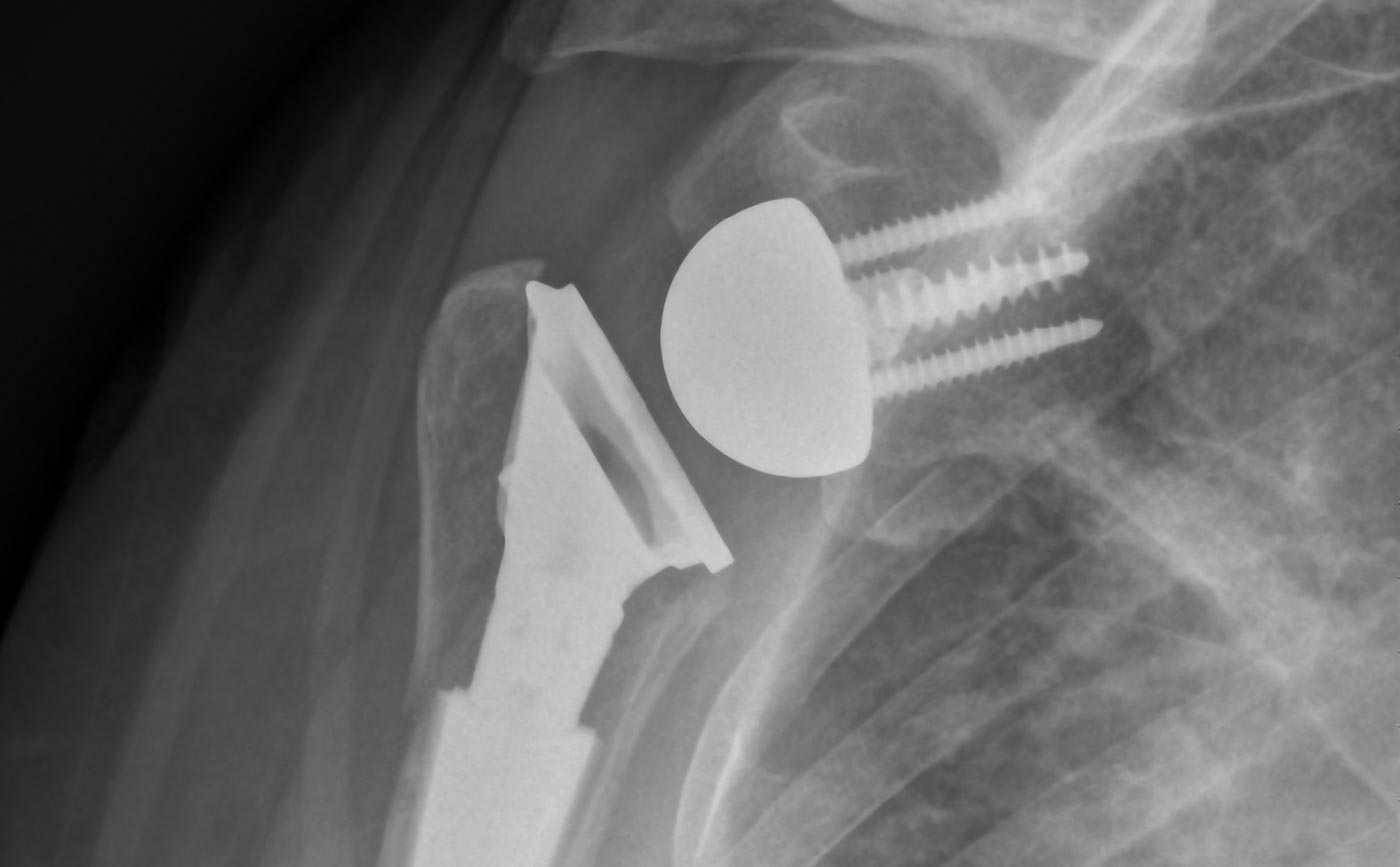
THE FUTURE OF TUBEROSITY MANAGEMENT IS HERE
The Catalyst Fracture System addresses what others overlook – without compromise. Why settle? Get in touch with our sales team to learn more.
Reference:
- Onggo JR, et al. Improved functional outcome and tuberosity healing in patients treated with fracture stems than nonfracture stems during shoulder arthroplasty for proximal humeral fracture: a meta-analysis and systematic review. J Shoulder Elbow Surg. 2021 Mar;30(3):695-705.
- United States Patent – D1,048,403
- Erickson BJ, et al. Tuberosity Repair in Reverse Total Shoulder Arthroplasty for Fracture Using a Stem-based Double-row Repair: A Cadaveric Biomechanical Study. J Am Acad Orthop Surg. 2020
Dec 1;28(23):e1059-e1065. - 4. Frankle MA, et al. Stability of tuberosity reattachment in proximal humeral hemiarthroplasty. J Shoulder Elbow Surg. 2002 Sep-Oct;11(5):413-20.
- O’Sullivan J, et al. A systematic review of tuberosity healing and outcomes following reverse shoulder arthroplasty for fracture according to humeral inclination of the prosthesis. J Shoulder Elbow Surg. 2020 Sep;29(9):1938-1949.
- Schmalzl J, et al. Higher primary stability of tuberosity fixation in reverse fracture arthroplasty with 135° than with 155° humeral inclination. J Shoulder Elbow Surg. 2021 Jun;30(6):1257-1265.
- Lopiz Y, et al. Reverse shoulder arthroplasty for proximal humeral fracture in the elderly. Cemented or uncemented stem? Int Orthop. 2022 Mar;46(3):635-644.
1000-0018-A